
 Written by M. Broderick
 The Difference Between Axial, Centrifugal, and Mixed Flow Fans
Not all fans are created equal. In HVAC and industrial ventilation, different fan designs are optimized for different applications. Choosing the right fan for your system can mean the difference between smooth, efficient airflow and costly inefficiencies.
The three most common types are axial, centrifugal, and mixed flow fans. Let’s break down what makes them different.
Axial Fans
How they work:
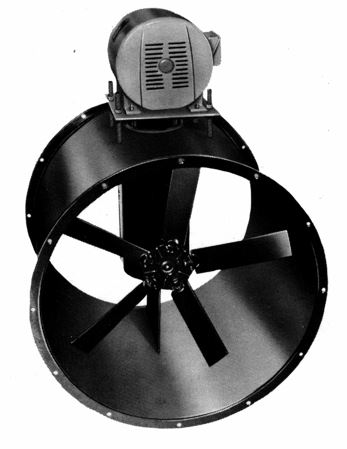
Axial fans move air in a straight line, parallel to the shaft of the fan. Imagine a propeller on an airplane — the blades “screw” through the air, pulling and pushing it forward.
Key traits:
- High airflow (large volumes of air)
- Lower static pressure handling
- Compact design
Best for:
- Spaces needing lots of air with minimal resistance (warehouses, cooling towers, general ventilation).
- Situations where energy efficiency at low-to-moderate pressures is the goal.
Centrifugal Fans
How they work:
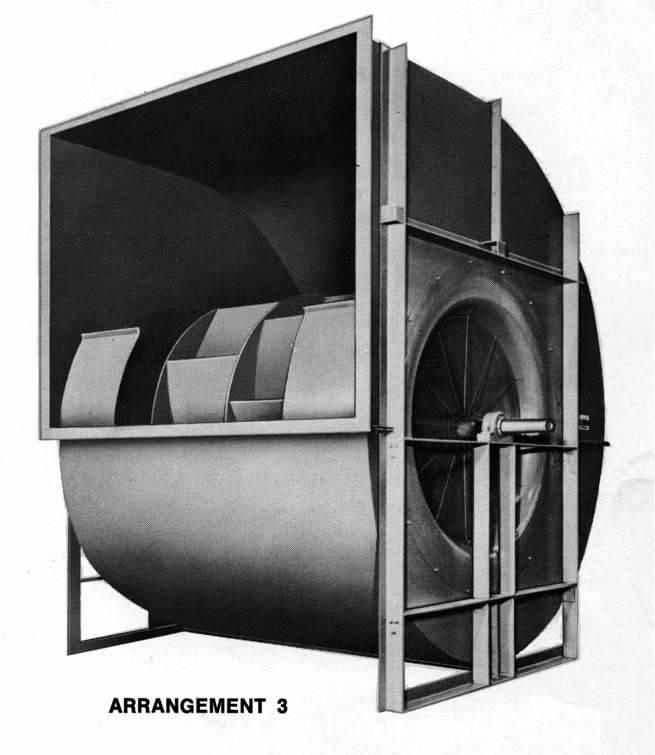
Centrifugal fans pull air into the center of the fan wheel and then push it out at a 90° angle using centrifugal force. This change in direction creates higher pressure capability.
Key traits:
- Lower airflow compared to axial fans (for the same size).
- Much higher static pressure handling.
- More robust design for heavy-duty applications.
Best for:
- Ducted systems with filters, coils, or long runs of ductwork.
- Industrial facilities, HVAC systems with high resistance, and cleanrooms.
Mixed Flow Fans
How they work:
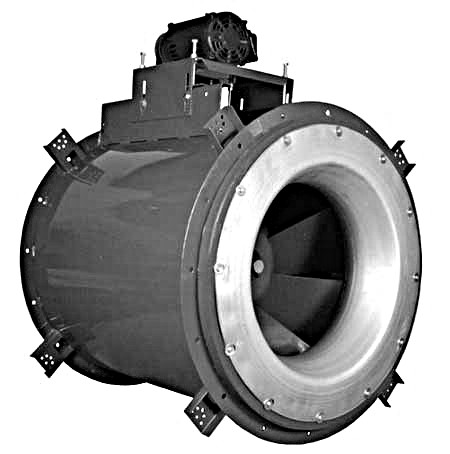
Mixed flow fans combine elements of both axial and centrifugal designs. Air enters parallel to the shaft (like an axial fan) but exits at an angle, gaining pressure boost from a centrifugal effect.
Key traits:
- Balanced performance: higher pressure than axial, more airflow than centrifugal.
- Quieter operation compared to pure centrifugal fans.
- Compact footprint relative to performance.
Best for:
- Commercial HVAC systems needing a balance of airflow and pressure.
- Situations where space is limited but efficiency and performance are critical.
Quick Comparison Table
| Feature | Axial Fan | Centrifugal Fan | Mixed Flow Fan |
| Airflow | High | Moderate | Moderate–High |
| Pressure Handling | Low | High | Medium |
| Efficiency | High at low resistance | High at high resistance | Balanced |
| Space Needs | Compact | Larger footprint | Compact/medium |
| Best Use | General ventilation, large open spaces | Ducted HVAC, industrial, filtration-heavy systems | Commercial HVAC, balanced applications |
Why Choosing the Right Fan Matters
Every HVAC project has unique airflow and pressure requirements. Using the wrong fan type can lead to:
- Wasted energy
- Excessive noise
- Uneven airflow distribution
- Increased wear and maintenance costs
At ILG Canadian Fans & Blowers Inc., we specialize in matching fan design to system needs — ensuring optimal airflow, compliance, and efficiency.